
Tridosha in Ayurveda Explained: Vata, Pitta & Kapha for Holistic Health

Introduction
Tridosha in Ayurveda is the foundational principle that explains how the human body functions, maintains balance, and develops disease when disturbed. According to classical Ayurvedic wisdom, every individual is governed by three biological energies—Vata, Pitta, and Kapha—collectively known as Tridosha. These doshas regulate all physical, mental, and emotional processes. From digestion and circulation to immunity and mental clarity, Tridosha in Ayurveda offers a comprehensive framework for personalized healthcare, making it highly relevant even in modern preventive medicine.
Understanding the Core Concept of Tridosha in Ayurveda
Tridosha in Ayurveda originates from the Panchamahabhuta theory, which states that all living and non-living matter is composed of five elements: earth, water, fire, air, and space. These elements combine to form the three doshas, each with specific physiological responsibilities.
Key principles of Tridosha in Ayurveda include:
- Tridosha governs all biological functions in the body
- Each dosha is present in every individual, but in unique proportions
- Balance of doshas maintains health, while imbalance leads to disease
- Doshas influence both physical structure and mental tendencies
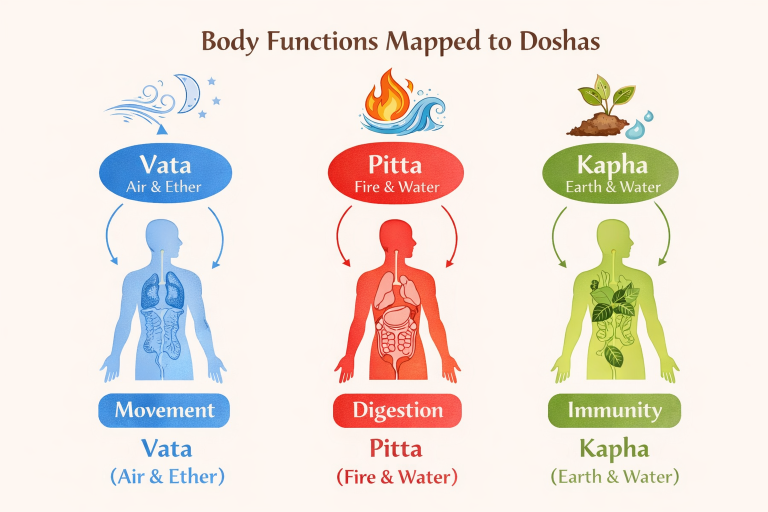
Classical Ayurvedic texts such as Charaka Samhita describe Tridosha as the body’s internal intelligence system, reinforcing its authority and time-tested reliability.
Vata Dosha: Principle of Movement and Communication
Vata dosha represents motion and communication within the body. It governs nerve impulses, respiration, circulation, elimination, and musculoskeletal movement. Individuals with Vata dominance often display creativity, alertness, and adaptability.
Functions of Vata Dosha:
- Controls movement of muscles and joints
- Regulates breathing and blood circulation
- Supports nervous system communication
- Governs elimination of waste
Signs of Vata imbalance may include:
- Joint pain and stiffness
- Dry skin and constipation
- Anxiety, fear, or restlessness
- Irregular digestion and sleep
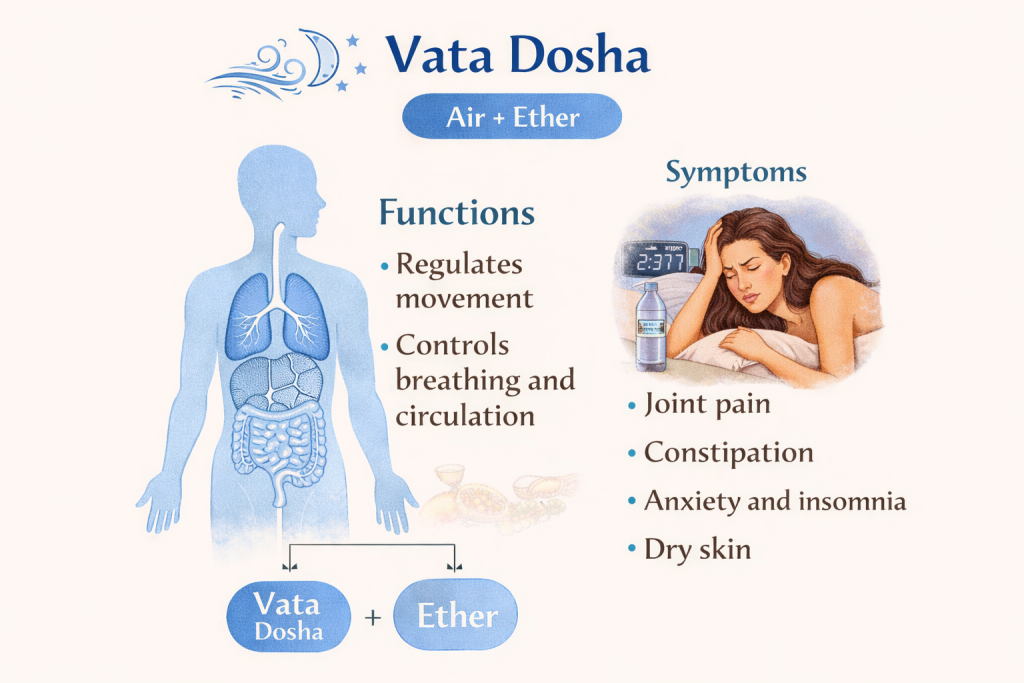
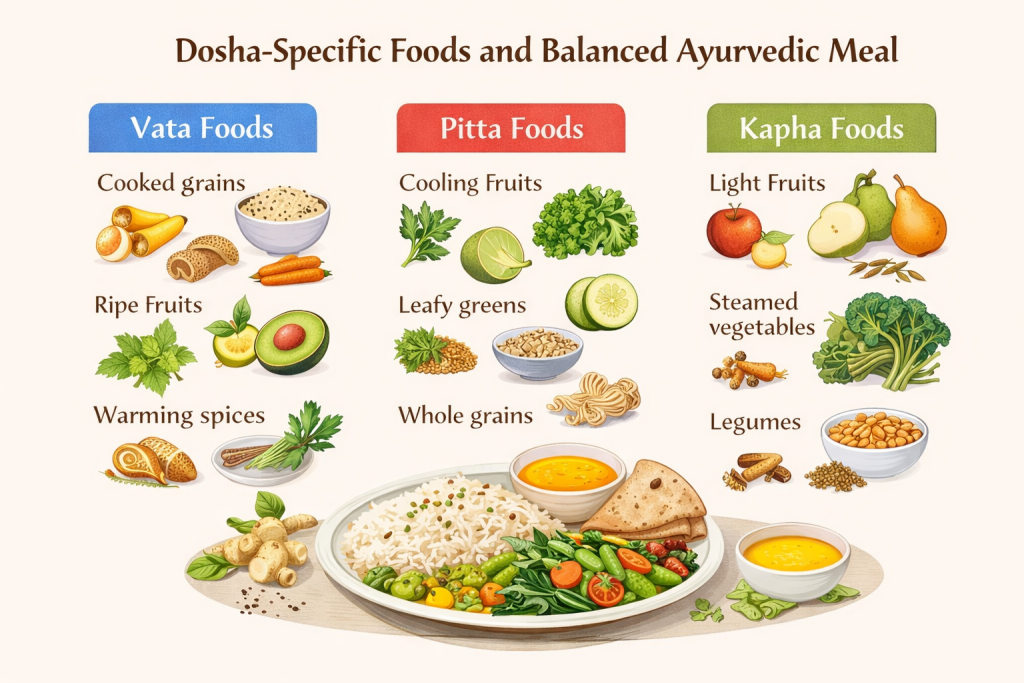
Experienced Ayurvedic practitioners emphasize grounding routines, warm foods, and regular schedules to stabilize Vata, highlighting Ayurveda’s experiential and practical approach.
Pitta Dosha: Center of Digestion and Metabolism
Pitta dosha governs transformation processes in the body, particularly digestion, metabolism, and temperature regulation. It is associated with intelligence, determination, and strong digestive capacity.
Primary roles of Pitta Dosha:
- Regulates digestive fire (Agni)
- Controls metabolism and energy production
- Maintains body temperature
- Supports vision and skin health
Common symptoms of Pitta imbalance include:
- Acidity and heartburn
- Inflammatory skin conditions
- Excessive anger or irritability
- Premature greying or hair loss
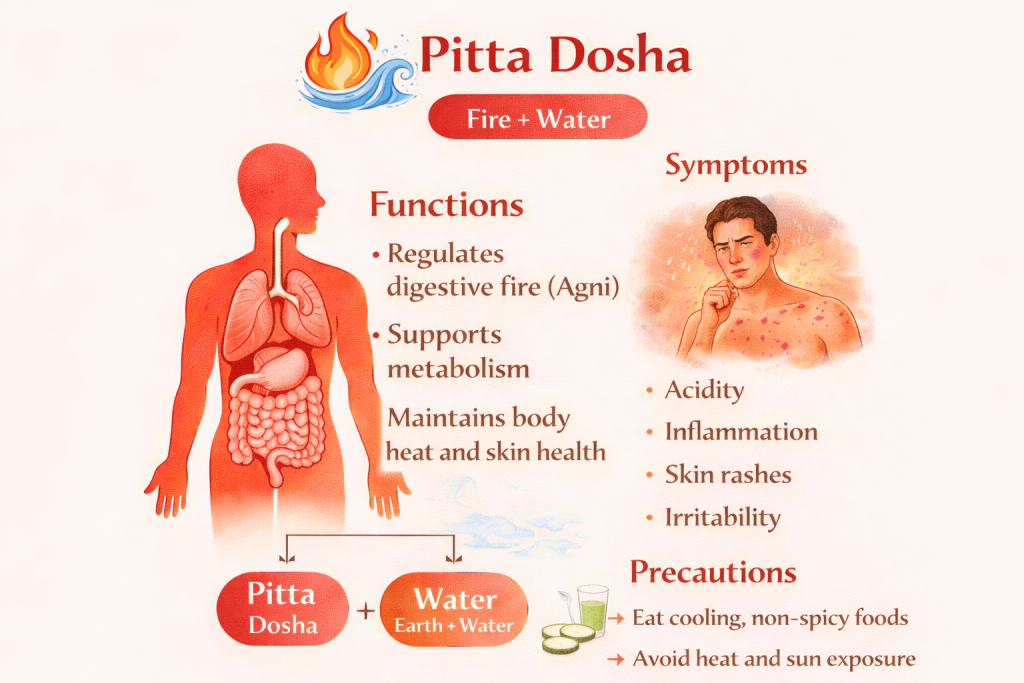
Ayurvedic expertise consistently recommends cooling foods, emotional moderation, and stress management to restore Pitta balance, reinforcing Ayurveda’s clinical trustworthiness.
Kapha Dosha: Foundation of Strength and Immunity
Kapha dosha provides structure, stability, and lubrication to the body. It supports immunity, tissue formation, and emotional calmness. Kapha-dominant individuals are generally strong, patient, and compassionate.
Key functions of Kapha Dosha include:
- Builds and maintains body tissues
- Lubricates joints and organs
- Enhances immunity and endurance
- Promotes emotional stability
Kapha imbalance commonly leads to:
- Weight gain and sluggish digestion
- Fluid retention and congestion
- Lethargy and low motivation
- Respiratory issues
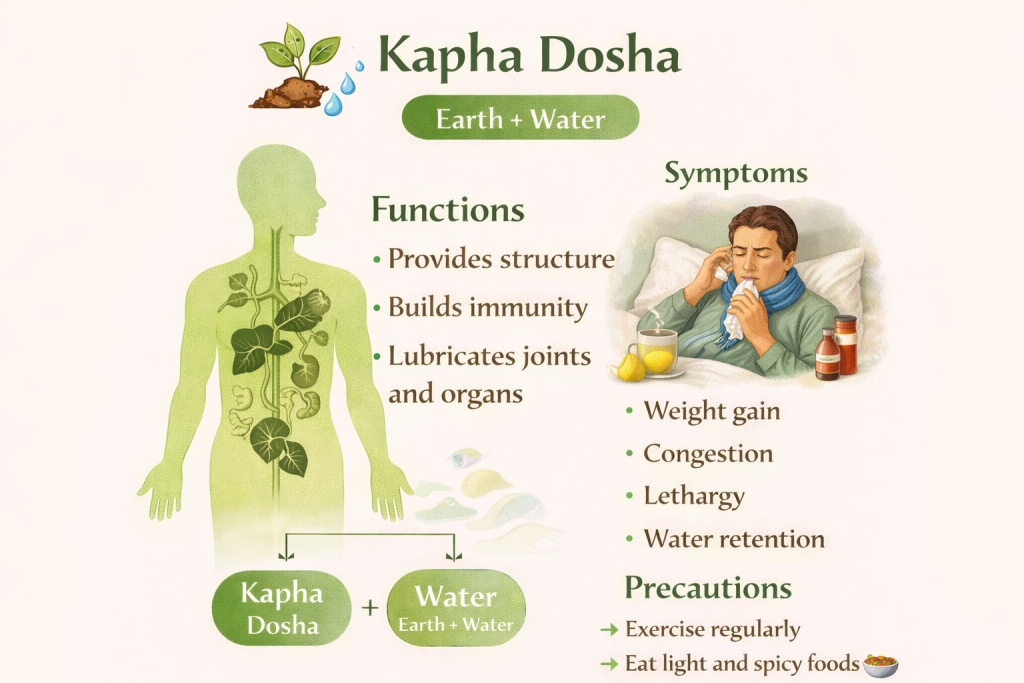
Ayurvedic clinical practice strongly advises regular physical activity, light diets, and stimulating routines to prevent Kapha accumulation.
Tridosha and Individual Constitution (Prakriti)
One of the most authoritative applications of Tridosha in Ayurveda is Prakriti analysis. Prakriti refers to an individual’s natural doshic constitution, determined at conception and unchanged throughout life.
Importance of understanding Prakriti:
- Helps predict disease susceptibility
- Guides personalized diet and lifestyle
- Improves treatment effectiveness
- Supports long-term preventive care
This personalized healthcare model aligns with modern precision medicine, enhancing Ayurveda’s credibility and relevance.
Tridosha Imbalance and Disease Formation
According to Ayurveda, disease develops when lifestyle, diet, emotions, or environmental factors disturb doshic balance. Prolonged imbalance leads to Ama (toxins), which obstruct bodily channels and impair tissue function.
Common causes of Tridosha imbalance include:
- Improper diet and eating habits
- Chronic stress and emotional suppression
- Seasonal and environmental changes
- Lack of routine or overexertion
Early identification of imbalance allows preventive correction, emphasizing Ayurveda’s proactive and trustworthy medical approach.
Therapeutic Role of Tridosha in Ayurveda
Tridosha in Ayurveda guides all therapeutic interventions, including herbal medicines, Panchakarma detoxification, dietary planning, and lifestyle correction.
Treatment decisions are based on:
- Dominant and aggravated dosha
- Individual Prakriti and age
- Stage of disease development
- Digestive strength (Agni)
This root-cause-based methodology distinguishes Ayurveda from symptom-focused treatment systems.
Tridosha in Preventive and Lifestyle Healthcare
Ayurveda strongly emphasizes prevention through daily (Dinacharya) and seasonal (Ritucharya) routines designed to maintain Tridosha balance year-round.
Preventive benefits of Tridosha-based living:
- Improved digestion and metabolism
- Stronger immunity
- Better mental clarity and emotional balance
- Reduced risk of chronic disease
Long-term clinical observations confirm that consistent dosha-aligned habits significantly improve quality of life.

Conclusion
Tridosha in Ayurveda provides a scientifically structured and experientially validated framework for understanding health, disease, and individuality . By recognizing the unique roles of Vata, Pitta, and Kapha and maintaining their balance through diet, lifestyle, and mindful living, Ayurveda offers a sustainable path to holistic well-being. Rooted in centuries of practice and increasingly supported by modern integrative research, Swasthyaveda remains a powerful guide for preventive and personalized healthcare.